The used Tesla I'm viewing shows 87% battery health. Is that good?
On its own, 87% does not tell you. Tesla says range declines gradually and naturally with the battery's mileage and age, so what matters is how 87% compares with this car's age and miles, and where the number came from. Ask the seller, see it on the car yourself, and get an independent inspection.
What this page covers
You are viewing a used Tesla, the seller or an app says its battery health is 87%, and you want to know if that is good. This page is for the United States. We cannot give you a verdict, because neither Tesla nor the government pages we read publish a table of what is good for each age and mileage. We can tell you what they do say and how to use it.
First: where does the 87% come from?
Ask. A figure may come from a screenshot, a third-party app, a dealer report or a test, and these do not always measure the same thing. We found no Tesla page that defines a battery health percentage, so the source of the figure matters more than the figure.
Ask to see it measured on this car, in person, at your viewing. A number someone sends you in a message is not the same as a number you see yourself.
What Tesla says about decline
Tesla’s manual says: “It is normal for estimated range to decrease slightly over the first few months before leveling off. Over time, you may see a gradual, but natural, decrease in range at full charge – this depends on factors such as the mileage and age of the Battery.” So some loss is expected, and how much depends on mileage and age. It does not say how much is typical, so we will not either.
What the Department of Energy says
The DOE’s Alternative Fuels Data Center says that studies have shown that an electric vehicle battery could have at least 70% of its initial capacity left at the end of its life if it has not failed or been damaged. Read that carefully. It is about the end of a battery’s life, and it does not tell you what to expect at four or five years. 87% is above that figure, and that is all it says.
Put the number next to the car
A figure only means something next to the car it belongs to. Write down for this car:
- the year and the mileage
- the figure, its source and the date it was measured
- how the owner charged it, if they will say (a car charged daily to a high level is not the same as one rarely charged)
- the version, because rated range differs between versions
Then compare it with other cars of the same version, age and mileage that you can see for sale, and ask the seller why this one should be priced where it is. Our sister site has a longer guide on how to run the check yourself and what counts as too much loss: Used Tesla Battery Health: What’s Normal Degradation and What Costs You (opens in a new tab).
Warranty and paperwork
Tesla’s Vehicle Warranty page says the New Vehicle Limited Warranty will follow your vehicle and be transferred to the new owner when the transfer is performed through Tesla, and it lists a Battery and Drive Unit Limited Warranty among the coverages. The terms are in the warranty document, so ask the seller for the paperwork and read what is covered and for how long before you decide. Our guide on questions to ask a private seller has more on this.
Get it inspected
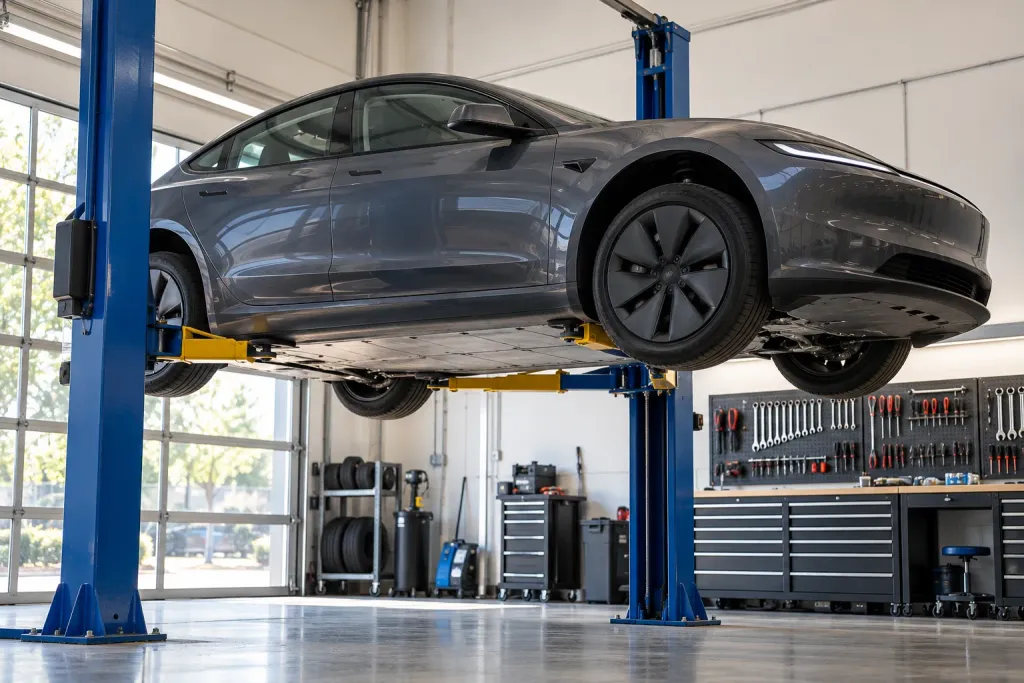
The FTC says it is best to have any used car inspected by an independent mechanic before you buy it, even if it has been certified and comes with a warranty. A general inspection looks at the mechanical condition of the car. Tell the mechanic you want the battery looked at as well, and ask what they can and cannot measure.
What the app adds
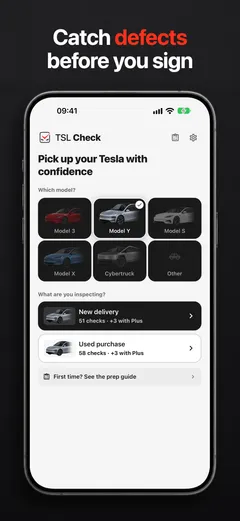
You will not remember all this at the viewing, and the seller may be in a hurry. TSL Check is the iPhone app we make. Its used-car checklist covers battery and range, the 12V battery, brakes and rust, title and liens, service and accident history, mileage and warranty, and keeps your photos and notes on each item (how it works). It does not replace the mechanic. Choose “Used purchase” and your model at the start, and go through the list at the viewing.
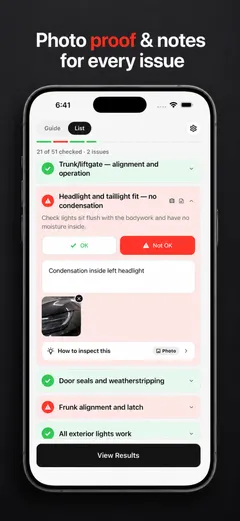
Whatever the figure, ask for the answers in writing before you pay, and keep your notes and photos with the seller’s messages.
Frequently asked questions
Is 87% battery health good for a used Tesla?
It depends on the car's age and mileage, and the Tesla and government pages we read give no table that says what is good for each. Tesla says a gradual, natural decrease in range depends on factors such as the mileage and age of the battery. Compare 87% with this car, not with a general number.
Where does the 87% come from?
Ask. It may come from a screenshot, a third-party app, a dealer report or a test. We found no Tesla page that defines a battery health percentage, so the source matters more than the figure. Ask to see how it is measured, on this car, in person.
What does the Department of Energy say about battery capacity?
The DOE's Alternative Fuels Data Center says studies have shown that an electric vehicle battery could have at least 70% of its initial capacity left at the end of its life if it has not failed or been damaged. That is about the end of a battery's life, not a guide to what is normal at a given age.
Does the battery warranty come with a used Tesla?
Tesla's warranty page says the New Vehicle Limited Warranty follows the vehicle and is transferred to the new owner when the ownership transfer is performed through Tesla, and it lists a Battery and Drive Unit Limited Warranty as part of that coverage. Ask the seller for the paperwork and read what it covers and for how long.
Should I get the car inspected?
The FTC says it is best to have any used car inspected by an independent mechanic before you buy it, even if it has been certified and is sold with a warranty. A general inspection is not a battery test, so say you want the battery looked at.
Sources
- Tesla Model Y Owner's Manual: Getting Maximum Range, consulted Oct 19, 2026 (opens in a new tab)
- U.S. Department of Energy: Electric Vehicle Batteries (Alternative Fuels Data Center), consulted Oct 19, 2026 (opens in a new tab)
- Tesla Support: Vehicle Warranty (United States), consulted Oct 19, 2026 (opens in a new tab)
- FTC: Buying a Used Car (PDF) (opens in a new tab)