Can you charge a Tesla from a normal home outlet, and is it enough?
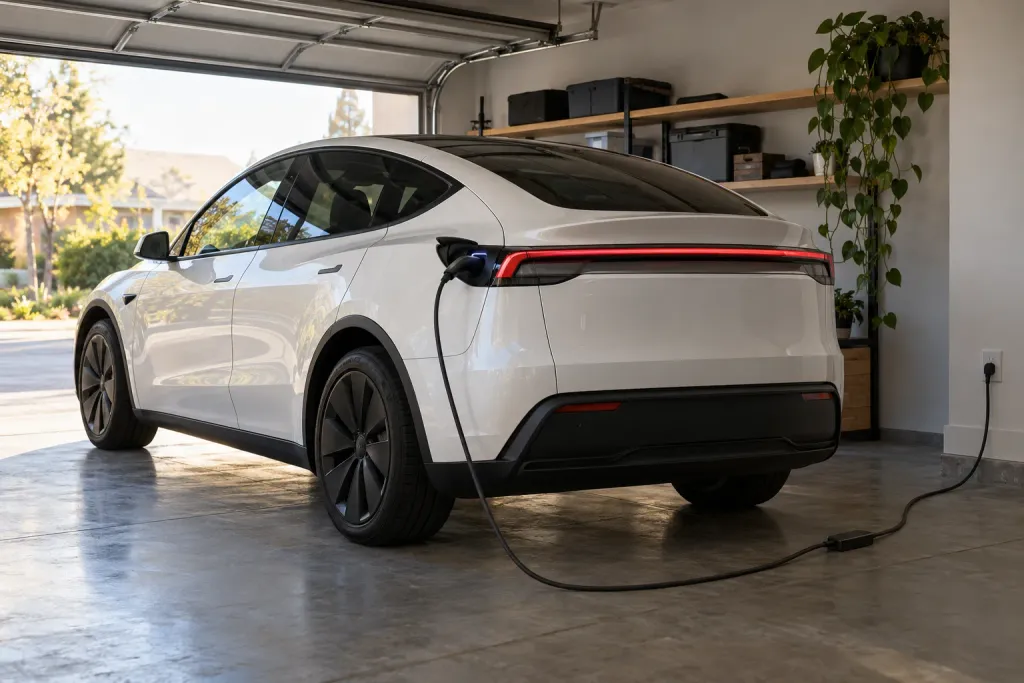
Yes. With a Mobile Connector in a standard 120-volt outlet, Tesla says you add about 2 to 3 miles of range per hour, and that this should meet your typical needs if you charge overnight and drive less than 30 to 40 miles a day. Drive more than that and a 240-volt outlet or a Wall Connector is the usual next step.
Who this guide is for
This guide covers the United States. Voltages, outlets and Tesla’s charging equipment differ by country, so if you live elsewhere, read Tesla’s charging page for your country before you rely on the numbers here. Every figure below comes from Tesla’s support pages or the U.S. Department of Energy, and each is listed in the sources at the end.
What you need to charge a Tesla from a normal outlet
Tesla’s Home Charging page puts the setup in one line: use the Mobile Connector with the included NEMA 5-15 adapter in a standard household (120 V) outlet at your parking spot. It also says “you do not need to install a Wall Connector for home charging.”
Two things to check before you count on it:
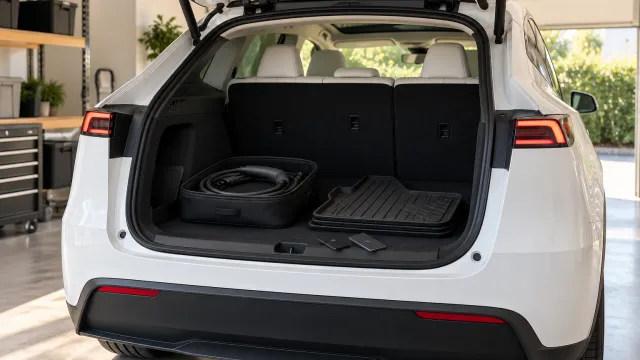
- The cable. Tesla’s support page describes the Mobile Connector as something you can purchase. A warranty note on the same page covers a Mobile Connector “included with purchase of the vehicle”. Whether one comes with your car depends on your market and your order, so look at your order instead of assuming.
- The outlet. The U.S. Department of Energy says overnight charging on a household outlet works for many drivers “provided that a power outlet on a dedicated branch circuit is available near their parking location.” If you do not know what else shares that circuit, an electrician can tell you whether the home has adequate electrical capacity for charging.
How fast is charging from a regular outlet?
Slow, and Tesla says so plainly: a 120 volt outlet “will supply 2 to 3 miles of range per hour of charge.” Here is how the home options compare on Tesla’s pages.
| Setup | What Tesla says you get |
|---|---|
| Mobile Connector in a standard 120 V household outlet | 2 to 3 miles of range per hour |
| Mobile Connector with the matching adapter in a 240 V outlet your installer approves | up to 30 miles of range per hour |
| Wall Connector, installed | up to 44 miles of range per hour |
Tesla notes that the speed depends on the vehicle. For the rear-wheel-drive Model 3 and Model Y, both the Wall Connector and the Mobile Connector top out at 32 amps, which Tesla lists as up to 30 miles of range per hour.
Is a normal outlet enough for your daily driving?
Tesla’s answer is a rule of thumb: “If you charge overnight and drive less than 30 to 40 miles per day, this option should meet your typical charging needs.”
You can see why with the numbers Tesla gives. Twelve hours plugged in at 2 to 3 miles per hour adds roughly 24 to 36 miles of range. That is our arithmetic from Tesla’s figures, not a Tesla promise, and it assumes the car stays plugged in for those twelve hours.
A week of real numbers beats a guess. Note your daily miles for a week and include your longest day. If your longest days regularly go past what an overnight charge adds, a normal outlet will leave you short on those days, and a faster option makes sense. The Department of Energy points the same way: Level 2 equipment suits “drivers with less regular schedules, longer commutes, or EVs with large batteries that require more than overnight (or the typical dwell time) to fully charge.”
Away from home it is a different job. Tesla calls Superchargers the fastest charging option when you are away from home.
What about a 240-volt (220v) outlet?
This is the upgrade many people ask about, often searching for it as “220v”. Tesla’s pages call it a 240 V outlet and describe it like this: “If you have a 240 V (dryer-type) outlet available where you park, using the Mobile Connector with one of the corresponding adapters can provide up to 30 mph of charge and may be the best solution for you as it avoids the cost of installation.”
There are conditions in Tesla’s own wording. It has to be an existing 240 V outlet “that your installer approves for charging use,” and you need the matching adapter, which Tesla sells as an adapter bundle. If you do not have a 240 V outlet, adding one is electrical work. The Department of Energy says charging equipment installations “must comply with local and state codes and regulations” and that appropriate permits may be required. It also says a qualified electrician can add circuits when a home lacks the capacity. Tesla points to its Certified Installers for quotes.
Wall Connector or Mobile Connector: which fits you?
Tesla’s own comparison is clear about the trade. The Wall Connector is installed and adds up to 44 miles of range per hour. Tesla calls it “our recommended home charging solution” because it also offers features the Mobile Connector does not, such as scheduling and charging statistics. The Mobile Connector is portable, adds 2 to 3 miles of range per hour on a standard outlet and up to 30 on a 240 V outlet, and you manage it from the car’s touchscreen and the Tesla app.
A few facts that settle common questions:
- The Mobile Connector and the Wall Connector have NACS plugs and only work with Tesla vehicles.
- The Universal Wall Connector has both NACS and J1772 plugs, so it charges Teslas and other electric vehicles.
- Tesla recommends plugging in every evening to top off the battery, and setting your charging schedule to your utility’s off-peak hours if it has low overnight rates.
Our reading, not Tesla’s: if your daily miles fit the first numbers above and the outlet is close to your parking spot, the Mobile Connector is the cheapest way to start. If you drive far, share a charger with another EV or want scheduling and statistics, the Wall Connector is the one Tesla recommends.
Apartment, condo or no outlet at your spot?
Talk to your property manager or HOA first. Tesla offers request templates for apartments and condos, and says “Increasingly, multi-unit dwellings are required by law to allow EV charging.” Rules differ by place, so check your local rules and ask in writing.
Before delivery day: the charging checks
Tesla recommends scheduling a home installation before your delivery because “this allows you to start charging immediately once you’ve received your vehicle.” With a normal outlet there is nothing to install, but the same logic holds: know which outlet you will use on day one, and where the cable and adapter will live.
Tesla’s Delivery Day page says charging equipment does not come standard with every Tesla, so it is worth reading what comes with a new Tesla before the day. If you are looking at a used car instead, our guide on what to ask a private seller covers the charging history.
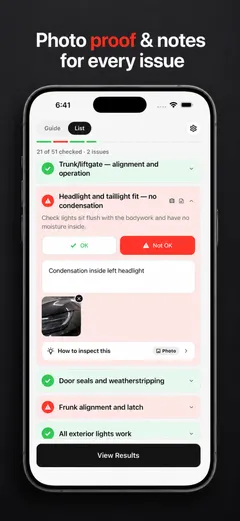
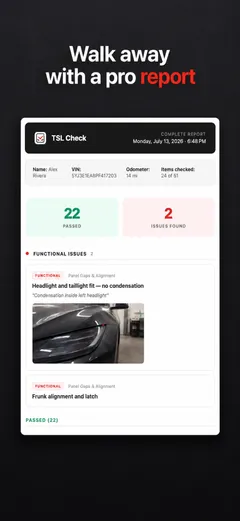
At delivery, three charging checks are easy to forget in the rush: the charging accessories you expected are really in the car, the charge port opens and closes, and a test charge starts. They are three items in the delivery checklist of TSL Check, the iPhone app we make, which also keeps your photos and notes if something is missing (how it works). If you want to plan the first week, the free first section of the app’s preparation guide includes a point on exactly that: planning your charging for the first week.
Frequently asked questions
Do I need an electrician to charge a Tesla from a normal outlet?
Not to plug into an existing standard outlet, as long as it is on a dedicated branch circuit near your parking spot. A new 240 V outlet or a Wall Connector is electrical work: the U.S. Department of Energy says installations must follow local and state codes and that permits may be required, and Tesla points to its Certified Installers for quotes.
How many miles will I add overnight on a 120 V outlet?
Tesla says 2 to 3 miles of range per hour. Twelve hours plugged in adds roughly 24 to 36 miles by simple arithmetic, depending on the vehicle and on how long the car stays connected.
Does the Mobile Connector come with a new Tesla?
It depends on your market and your order. Tesla's support pages list the Mobile Connector as something you can purchase, and a warranty note covers a Mobile Connector that is included with the purchase of the vehicle, so check your order and ask at delivery.
Can a Tesla charge outdoors in the rain?
The U.S. Department of Energy says outdoor installation and use of residential charging equipment is safe, even if the vehicle is charged in the rain, but outdoor installations require outdoor-rated equipment.
Can the Tesla connectors charge other electric cars?
Tesla says the Mobile Connector and the Wall Connector have NACS plugs and only work with Tesla vehicles. The Universal Wall Connector has both NACS and J1772 plugs, and Tesla says it is compatible with most electric vehicles in North America.
What if I rent or live in an apartment?
Ask your property manager or HOA first. Tesla offers request templates for apartments and condos, and says multi-unit dwellings are increasingly required by law to allow EV charging, so check your local rules and ask in writing.
Sources
- Tesla Support: Charging (United States), consulted Oct 19, 2026 (opens in a new tab)
- Tesla Support: Tesla Home Charging (United States), consulted Oct 19, 2026 (opens in a new tab)
- U.S. Department of Energy, Alternative Fuels Data Center: Charging Electric Vehicles at Home, consulted Oct 19, 2026 (opens in a new tab)