My new Tesla shows less range than advertised. What now?
Tesla's manual says the range on your screen is an estimate based on EPA-rated consumption that may not account for your driving or conditions, and that it is normal for it to dip slightly over the first few months. Note the figure with a photo at delivery, then compare against your own driving in the Energy app.
What this page covers
Your new Tesla shows a range that is lower than the number you saw when you ordered it, and you want to know if something is wrong. This page is for the United States and uses Tesla’s Model Y Owner’s Manual, the EPA’s label explanation and Tesla’s own comparison page. Other models have their own manuals, so read yours.
What the number on the screen is
Tesla’s manual says the driving range displayed in the car is an estimate of the remaining battery energy based on EPA-rated consumption. It adds that this “may not account for your personal driving patterns or external conditions,” and that the displayed range may decrease faster than the actual distance driven. Tesla’s design page lists the figure for each version as “Range (EPA est.)”, so the number you saw when you ordered is the same kind of estimate.
The EPA, which runs the rating, says on its electric vehicle label page that the driving range is the approximate number of miles on a full charge in combined city and highway driving. It also says your own result may differ because of how you drive and maintain the car, how much you use air conditioning and other accessories, the weather, road conditions and how much the car is loaded.
What changes the range
Tesla’s manual lists what affects energy use while driving. In short: higher speed, cold or hot weather and wind, using the climate controls, uphill travel, short trips and stop-and-go traffic, heavy cargo, windows down, wheels and tires that are not maintained, and roof racks or third-party wheels. While parked and not plugged in, it lists preconditioning or climate use, Summon, the infotainment and climate controls, Sentry Mode and app requests.
If you drove the car home in the cold, on the highway or with the air conditioning on, a figure below the rated one is what Tesla’s own list would lead you to expect. We cannot say how much it should change in your case, because Tesla does not give a number.
The first few months
Tesla says: “It is normal for estimated range to decrease slightly over the first few months before leveling off.” It also says that over time you may see a gradual, natural decrease in range at full charge, depending on factors such as the mileage and age of the battery, and that the car will inform you in the unlikely event a hardware issue is causing excessive battery or range degradation. We cannot tell you how many miles “slightly” is. If the drop looks sharp to you, that is a question for Tesla, with your records in hand.
See your real consumption
The Energy app in the car shows your real-time and projected energy usage, and Tesla’s manual says you can use it to view the estimated range based on your recent consumption, instead of the rated figure. That is a more honest measure of what the car does for you than a number on the screen at a parking spot.
What to record
Our suggestion, not Tesla’s:
- On delivery day, photograph the touchscreen with the charge level and the range figure it shows, and note the date.
- Note how the car was driven to get home: speed, temperature, climate use.
- After a few drives, open the Energy app and photograph the consumption view.
- Keep them together with your order summary, which names the version and the range you were told.
Why this record is hard to make later
At the center you are not thinking about range. You are looking at the car, listening to the advisor and signing. The figure you could have photographed is gone by the time you wonder about it.
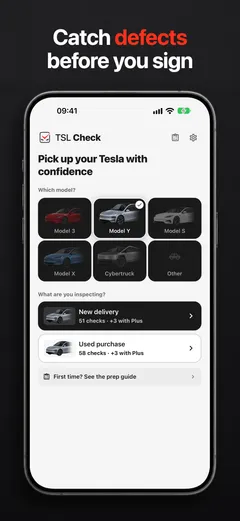
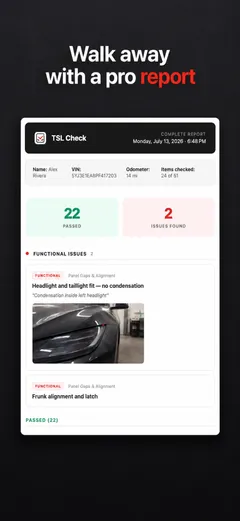
TSL Check is the iPhone app we make for that moment. Its delivery checklist takes you around the car area by area, with a photo and a note on any item, and a summary you can keep or share (how it works). Opening it before the day and choosing your model puts the range figure on the list instead of in your memory.
If you are also unsure what to look at on a car that has waited, see my Tesla was built months ago, and for the list of what Tesla says comes with it, what comes with a new Tesla.
If you have a concern about the range, ask the delivery advisor to record it before you sign, and read your order paperwork for what you can do next.
Frequently asked questions
Why does my Tesla show less range than the advertised figure?
Tesla's Model Y Owner's Manual says the driving range shown in the car is an estimate of the remaining battery energy based on EPA-rated consumption, and that it may not account for your personal driving patterns or external conditions. The EPA says your own result can differ because of how you drive, air conditioning, weather, road conditions and load.
Is it normal for the range to drop in the first months?
Tesla's manual says it is normal for the estimated range to decrease slightly over the first few months before leveling off. It also says that over time a gradual, natural decrease at full charge depends on the mileage and age of the battery.
What changes the range while I drive?
Tesla's manual lists, among other factors, driving speed, cold or hot weather and wind, using climate controls, uphill travel, short trips or stop-and-go traffic, heavy cargo, windows down, wheels and tires not maintained, and roof racks or third-party wheels.
How do I see my real consumption?
Tesla's manual says the Energy app shows your real-time and projected energy usage, and that you can open it to see the estimated range based on your recent energy consumption instead of the rated figure.
Does the advertised figure mean the same everywhere?
No. Tesla's manual notes that rated range in the United States is based on EPA-rated consumption, which deviates from tests advertised and performed in other jurisdictions. This page covers the United States.
Sources
- Tesla Model Y Owner's Manual: Getting Maximum Range, consulted Oct 19, 2026 (opens in a new tab)
- U.S. Department of Energy and EPA: Learn more about the electric vehicle label, consulted Oct 19, 2026 (opens in a new tab)
- Tesla: Model Y design page, Compare Models (United States), consulted Oct 19, 2026 (opens in a new tab)