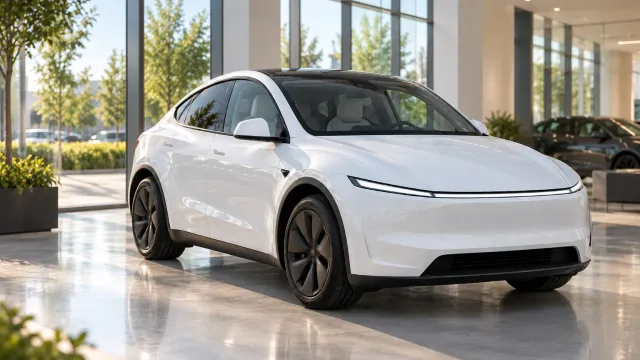
Returning a leased Tesla: what counts as excess wear, and how does the inspection work?
Tesla's US pages say it contacts you 30 to 60 days before the lease ends for a self-inspection and a drop-off appointment. A few small dings, chips or scratches are normal; dents, glass cracks, torn upholstery, tire tread under 4/32 inch and missing keys or cables are not. You can repair before the inspection. Your lessor and agreement decide the rest. Not financial advice.
Who this guide is for
This guide is for the United States and for cars leased from Tesla Lease Trust. It follows three Tesla support pages, read on November 1, 2026. If your lessor is a third party, Tesla says to ask that lessor, because its options may differ. If you live elsewhere, the rules are local: in the UK, see Tesla Personal Contract Hire UK. We give no prices, fees or per-mile rates, because they sit in your agreement. This is not financial advice.
The short answer
Tesla says it contacts you 30 to 60 days before your maturity date to complete a final inspection and schedule your drop-off. It runs a self-inspection process, and its guidelines decide whether wear is normal or excess. You can often repair damage before the inspection, which may avoid charges. At the drop-off you bring both key fobs and the mobile charging bundle, and you clear your data first.
How the return works
- Look at the guide first. Tesla’s Excess Wear and Use Guide separates normal wear from excess wear.
- Start in the Tesla app. Open Financing and follow the prompts to complete your inspection and schedule the drop-off.
- Repair if you want to. Tesla says you may avoid extra costs by repairing excess wear before the final inspection, and to keep the receipt if you repair after submitting it.
- Clear your data. On the touchscreen, tap Controls, Service, then Factory Reset. Tesla says you are responsible for removing your personal data.
- Drop off the car. Bring both key fobs and the mobile charging bundle. After the return you are billed for any remaining charges to meet your lease obligations, which you can see in the app within two business days.
What Tesla calls normal and excess wear
Tesla says normal wear can include a few small door dings, chips or scratches, and that it does not charge for them. Its table gives limits. We repeat the main ones as Tesla states them, dated November 1, 2026:
- Scratches. Scratches that do not break the paint, or that break it but are under 4 inches (up to three per panel), are normal. Scratches that break the paint and are 4 inches or longer are excess.
- Dents. Dents that do not break the paint and are under 2 inches (up to two per panel) are normal. More than three on one panel, or any dent over 2 inches, is excess.
- Chips. Ten or fewer chips smaller than 1/8 inch are normal; eleven or more are excess.
- Glass. One chip up to 1/4 inch, outside the driver’s line of sight, is normal. Two or more, a larger chip or crack, or any damage in the driver’s line of sight is excess.
- Tires and wheels. Tread of 4/32 inch or more and tires that match the required size and rating are normal; Tesla suggests a penny test. Scratches that add up to under 6 inches on a wheel are normal; bent or broken wheels, mismatched wheels or three or more scratches or dents per wheel are excess.
- Interior. Removable spots are normal. Tears, burns, odors such as smoke, mold or pets, heavy grime and missing or broken equipment are excess.
- Missing items. The owner’s manual, charging cables and key fobs must come back. Warning lights must be diagnosed and repaired.
- Repairs and changes. Earlier repairs should have been done by Tesla or an authorized provider. Aftermarket parts, unauthorized modifications and changes to the factory window tint are excess.
Tesla says the chart is not all-inclusive, so you may be charged for something not on it. Treat our summary as a map, and read Tesla’s table and your agreement.
Extend, buy or end early
- Extend. If your account is in good standing and you are within three months of maturity, Tesla says you can apply for an extension of up to six months, once.
- Buy. Tesla says leased cars with Tesla Lease Trust may be eligible, depending on the purchase option in your agreement, and that Iowa and Louisiana are not eligible. You request an estimate in the app, and the purchase packet must be signed by everyone on the lease.
- End early. Tesla says early termination is allowed while payments remain, “can be costly”, and works differently with less than three months left. The quote can change after an inspection, and a quote expires before your next payment date.
- Exchange for a new Tesla. Tesla says you can link a lease return to a new order, and that loyalty incentives are subject to change. There is no loaner during the transition.
Before you return it
Our suggestions, not Tesla’s:
- Walk around the car in daylight with Tesla’s table and photograph every panel, wheel and the glass.
- Check the tire tread, the interior and the mismatched or missing items on Tesla’s list.
- Remove aftermarket parts and tint changes before the inspection.
- Keep any repair receipt and the Tesla app screenshots of your inspection.
- Ask in writing who your lessor is and which standard they apply.
What we did not confirm
We did not read your lease agreement, a lessor’s own guide or how disputes are handled. We do not know how Tesla treats a case that falls between normal and excess. For the first steps of a lease, see how a Tesla lease works; for the buy-or-lease choice, see lease or buy a Tesla.
Record the car on day one, and on the last day
TSL Check is the iPhone app we make for Tesla deliveries. Its checklist takes you around the car area by area, with a photo and a note for each point (how it works). It is meant for taking delivery, not for the return, but the same habit helps at both ends: a dated record of the car as you received it. It does not touch your lease or payments.
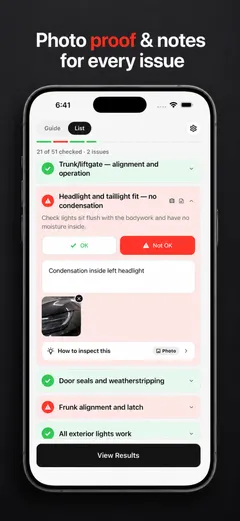
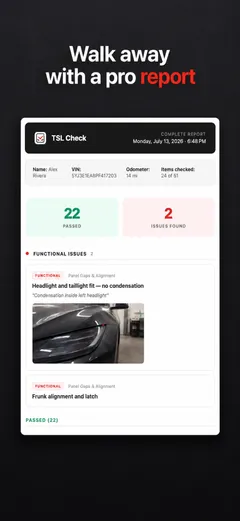
Whatever you find at delivery, ask the advisor to record it before you sign, and keep a copy.
Frequently asked questions
When does Tesla start the lease return?
Tesla says it contacts you 30 to 60 days before your maturity date to complete the final inspection and schedule your drop-off appointment. You can also start the return in the Tesla app, in the Financing section.
What does Tesla count as normal wear?
Tesla's Excess Wear and Use Guide says normal wear can include a few small door dings, chips or scratches, and you are not charged for them. Its table gives limits, for example up to ten chips smaller than 1/8 inch, and dents under 2 inches (up to two per panel) that do not break the paint.
What is excess wear?
Tesla lists dents, cracks in glass, tears in upholstery, burns, odors, rust, tire tread below 4/32 inch, and poor-quality repairs as excess. Missing items such as the owner's manual, charging cables or key fobs also count. Tesla says its table is not all-inclusive.
Can I repair damage before the inspection?
Yes, and Tesla says you may avoid extra costs by doing so. It suggests checking whether your insurance covers the damage, using Tesla or a Tesla Certified Collision Center, and keeping the repair receipt. Aftermarket parts and tint changes must be removed.
What do I bring to the drop-off?
Tesla says to bring both key fobs and the mobile charging bundle. Before you return the car, clear your data and restore the factory settings: Controls, then Service, then Factory Reset on the touchscreen.
Can I buy the car or end the lease early?
Tesla says a leased car may be bought at the end where the agreement includes a purchase option, and that an early termination is allowed but can be costly. The options differ if the lessor is not Tesla Lease Trust.